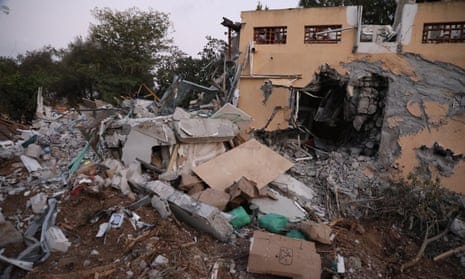
Explaining and justifying Israel's response to the October 7th atrocities should have been the simplest task in modern diplomacy. When terrorists murder 1,200 innocent civilians in a single day, kidnap over 240 people, and invade a sovereign nation with the explicit goal of killing as many Jews as possible, the world should understand why that nation must respond with overwhelming force. The moral case was ironclad, the evidence overwhelming, the justification absolute.
Yet Israel managed to turn this moral slam-dunk into a contested narrative through what can only be described as catastrophically bad communication strategy. Instead of building their case on the indisputable foundation of mass murder, Israeli advocates chose to emphasize sexual violence allegations, creating vulnerabilities that Hamas supporters could exploit.
The term "hasbara"—Israeli public diplomacy—has become synonymous with this kind of strategic failure, and for good reason. But here's the crucial point: what Israel needed after October 7th wouldn't even be called hasbara. It would simply be called telling the truth clearly and confidently. When you have an ironclad case built on indisputable facts, you don't need public diplomacy tactics, you need moral clarity and the confidence to assert it.
Two debunked accounts illustrate how Israel's misguided approach backfired spectacularly. Chaim Otmazgin, a ZAKA volunteer working in Kibbutz Be'eri, allegedly found a teenage girl's body with her pants pulled down and assumed sexual assault. Three months later, ZAKA discovered Israeli soldiers had dragged the body to check for booby traps, causing the clothing displacement.
Even more damaging was the fabricated story about a baby being cut from a mother's stomach, spread by both ZAKA's Yossi Landau and United Hatzalah's Eli Beer. There is zero evidence for this claim. Zero. This completely unnecessary claim served only to undermine Israel's credibility when the documented mass murder already provided overwhelming justification for any response. (I want to pre-emptively state, without hesitation, that the volunteers who rushed to the front lines on October 7th are heroes in every sense of the word; my comments are directed solely at the public statements made by leadership.)
These cases illustrate the fundamental problem: individuals made assumptions about horrific scenes, but Israeli advocates chose to emphasize these contestable allegations over documented mass murder. This represents every mistake that Israeli communication typically makes, concentrated into one catastrophic strategy. Whether Hamas murdered women or raped and then murdered them "systematically" does not change Hamas's moral standing as a genocidal group that must be entirely eradicated. Hamas's evil was complete when they crossed into Israeli territory to murder civilians. Everything else obscures the central moral truth.
Yet Israel's communication apparatus made three critical errors. First, they chose contestable evidence over solid proof. Mass murder was documented on video and impossible to deny. Sexual violence allegations were inherently harder to prove and easier to dispute. Second, they made credibility dependent on witness testimony. When witnesses came under attack, it cast doubt on Israel's entire October 7th narrative. Third, they shifted debate from Hamas's actions to Israel's evidence. Instead of discussing what to do about a genocidal organization, discourse focused on whether Israel could prove sexual violence allegations.
The debunked ZAKA and United Hatzalah accounts provided Hamas supporters exactly what they needed to undermine Israel's credibility. As the Associated Press noted, these stories "encouraged skepticism and set off a highly charged debate about the scope of what occurred on Oct. 7." Multiple actors drove this failed strategy. Sheryl Sandberg's documentary "Screams Before Silence," while well-intentioned in its effort to document the horrors of October 7th, fell flat due to inadequate fact-checking that should have been handled by the producers and fact-checkers responsible for vetting witness accounts and verifying claims before broadcast.
The documentary's problems are exemplified by its heavy focus on Rami Davidian, who claims he found dozens of women tied to trees and subjected to abuse and rape. Yet there is scant evidence to back up any of these dramatic claims. This reliance on unverified accounts demonstrates precisely how the emphasis on sexual violence created vulnerabilities that Israel's enemies could exploit when such claims inevitably came under scrutiny.
The Dinah Project devoted resources to proving sexual violence was "systematic"—as if this distinction mattered to the moral calculation. Israeli officials chose to lead with contested allegations over indisputable facts in diplomatic communications.
This coordinated campaign produced the opposite of its intended effect, creating opportunities for Israel's enemies to attack its credibility and minimize the October 7th attack. The sexual violence obsession represents a core communication failure: treating Jewish suffering as requiring special justification. By suggesting mass murder was insufficient to justify Israel's response, advocates validated the premise that attacks on Jews are more acceptable than attacks on others.
What Israel needed wasn't hasbara—it needed moral confidence. Effective communication would assert that Jewish lives have absolute value and Israel's right to self-defense is unconditional. Instead, Israeli advocates treated Jewish suffering as requiring elaborate justification. The United Nations presented credible evidence of Hamas sexual assault, but this was never necessary. The systematic murder of roughly 1,200 civilians provided complete justification for eliminating the Hamas threat.
Effective communication about October 7th wouldn't be called hasbara—it would be called telling the truth. The message would be devastatingly simple: Hamas murdered roughly 1,200 innocent civilians in a coordinated attack. This genocidal organization must be eliminated. Any nation would respond with overwhelming force. Israel's response is morally required. This message is unassailable because it's built on indisputable facts and fundamental principles. No one can deny the mass murder or question Israel's right to self-defense. It requires no sophisticated messaging strategy, no elaborate documentation projects, no appeals to special sympathy. Just moral clarity based on undeniable truth.
The very fact that Israel felt it needed "hasbara" for October 7th reveals the problem. When terrorists murder 1,200 civilians, you don't need public diplomacy—you need the confidence to state the obvious: this is evil, it must be stopped, and any nation would do what Israel is doing. The sexual violence emphasis represents the pathology of treating straightforward moral cases as complex communication challenges. Israel's advocates transformed a moral slam-dunk into a contested narrative by making their case partially dependent on contestable evidence rather than solid facts.
Hamas murdered roughly 1,200 innocent people and must be eliminated. This truth needs no embellishment, no strategic messaging, no sophisticated presentation. The sexual violence obsession created opportunities for Israel's enemies to attack its credibility—the opposite of effective communication. The tragedy is that Israel possessed the most powerful argument possible: documented mass murder by a genocidal organization. Yet they chose to complicate this simple truth with contested allegations that created vulnerabilities where none should exist.
The path forward requires abandoning the entire hasbara mindset and returning to moral clarity based on indisputable facts. Israel doesn't need better public diplomacy—it needs the confidence to assert obvious truths without apology or elaborate justification. When you have right on your side, backed by overwhelming evidence, you don't need hasbara. You need moral clarity, factual precision, and the confidence to let the truth speak for itself. The October 7th massacre provided Israel with the strongest possible case for its actions. The tragedy is that Israel's own advocates chose to weaken that case through unnecessary complications that served their enemies' interests.
Effective communication about October 7th would be so straightforward, so obviously justified, that no one would even think to call it hasbara. It would simply be called telling the truth about evil and the necessity of stopping it.