


The story of October 7th is one of trauma, heroism, and tragedy. It is also a story being told to donors across the Jewish world in ways that raise serious questions. At the Republican Jewish Coalition gathering, United Hatzalah’s founder Eli Beer allegedly told a dramatic story about that day. In the immediate aftermath of his speech, an article previewing his upcoming visit to Nashville repeated those same claims, and they quickly became the frame through which local donors and rabbis understood his work.
The preview article reported the following:
“Beer spoke about October 7th, and the more than 800 people who were saved that day by United Hatzalah volunteers. ‘People from Magen David Adom were told not to go in there because it was too dangerous. But since United Hatzalah is an all-volunteer force, they went in there and several of their people were killed that day,’ says Bernie Pargh.”
The contrast presented here is unmistakable. Magen David Adom is portrayed as holding back, while United Hatzalah is described as charging forward with courage. To an American donor, the implication is obvious: MDA stayed away, and United Hatzalah went in. The article itself acknowledges the impact.
“The story moved and inspired Pargh to donate funds to buy an ambulance.”
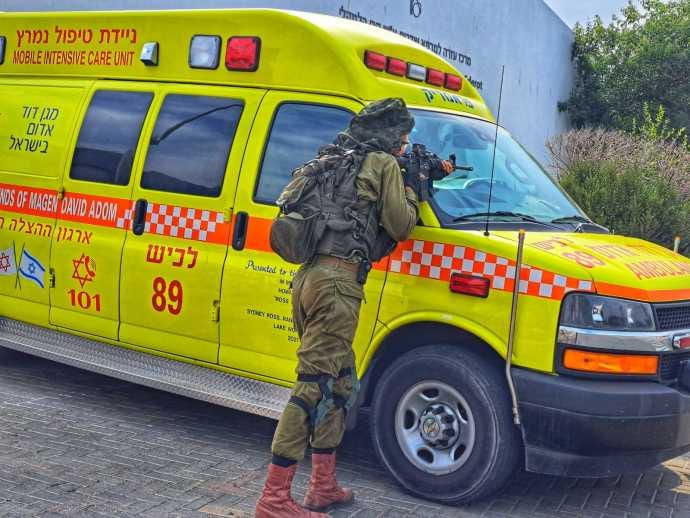
This was not just a matter of rhetoric. The story led to immediate and substantial giving, with one ambulance donation turning into two on the spot. The framing of events from October 7th—the bravery of United Hatzalah set against the supposed retreat of MDA—was central to that outcome. Yet the public record shows that MDA ambulances and helicopters were operating under fire that day, and that MDA staff were killed in action. That raises the question of whether donors were being given a fair and accurate account.
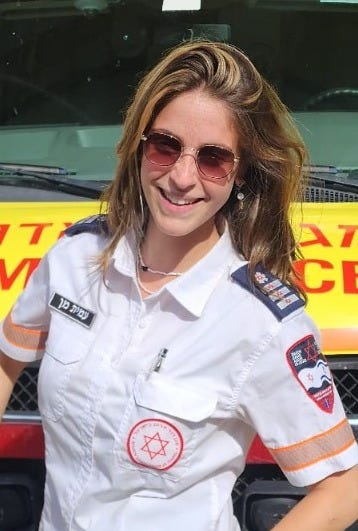
The sacrifice of MDA heroes deserves recognition. MDA paramedic Amit Mann, 22, remained behind in a clinic at Kibbutz Be’eri treating the wounded until terrorists breached the building—she was murdered in that clinic while saving others.
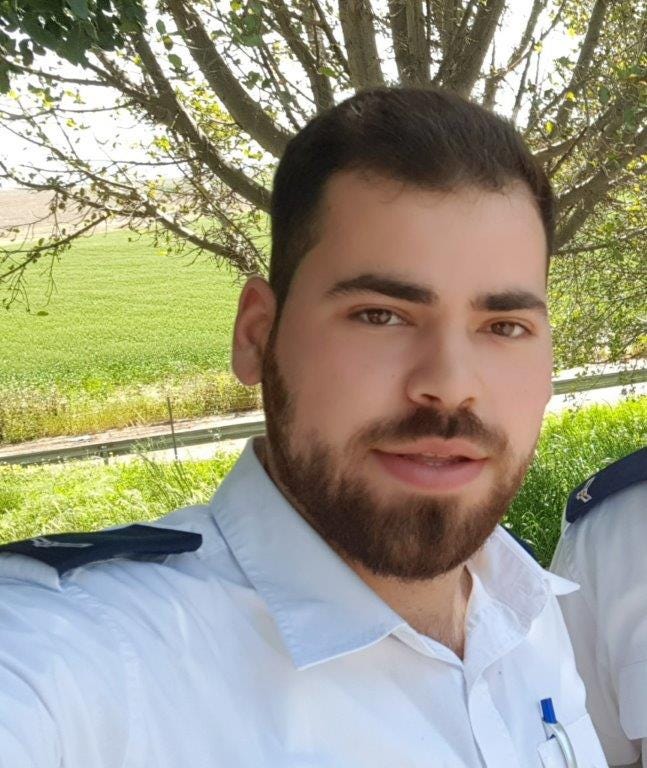
And in Ofakim, ambulance driver and senior paramedic Aharon Haimov, 25, was shot and killed while driving to treat victims of the Hamas assault. These responders died performing exactly what the Nashville story suggested MDA could not or would not do. Acknowledging their sacrifice paints a very different picture from the one implied in Beer’s narrative.
The concern is sharpened by the fact that United Hatzalah has a history of making disparaging claims about Magen David Adom that were later judged to be false. In 2021, the Tel Aviv District Court ruled that United Hatzalah and its leaders had carried out a “coordinated plan to defame and libel Magen David Adom.” The court ordered United Hatzalah to pay 250,000 shekels in damages, writing that the organization had slandered MDA “through false and disgraceful statements made to the news media.” The court further noted that United Hatzalah had ignored Ministry of Health directives by continuing to publish its own emergency number, a practice described as “dangerous and harmful to public safety.” In one tragic incident cited in the case, the court found that United Hatzalah failed to notify MDA quickly during an emergency involving a preschool child and that the responding United Hatzalah medic lacked the proper pediatric equipment.
Questions about Eli Beer’s credibility do not stop there. At the same RJC gathering where he allegedly told the story contrasting United Hatzalah and Magen David Adom, Beer also repeated sensational atrocity accounts that were widely circulated at the time. These included claims that a baby had been cut from a woman’s stomach and that infants had been placed in ovens. These stories were widely reported in the immediate aftermath of his speech but were later shown by Israeli authorities and journalists to be untrue. Linking such claims to fundraising appeals raises further concerns about the accuracy and reliability of the messaging being presented to American audiences.
United Hatzalah has several thousand volunteers that dedicate their lives, and nothing here diminishes their courage. But it is troubling to see fundraising stories allegedly built on a framework that implicitly suggests that Magen David Adom failed when in fact its personnel also risked and lost their lives on October 7th. When combined with a documented court finding of defamation against MDA, and with prior instances of false atrocity stories allegedly repeated to donors, the pattern appears concerning and merits scrutiny. If history is any guide, donors should approach such narratives with caution, especially when one organization’s heroism is elevated in a way that risks diminishing another’s sacrifice.
the detail here is amazing
Eli Beer claims in the ArtScroll book that MDA placed all kinds of obstacles in the creation of Hatzalah in Israel which has a very well better and quicker response record than MDA and which in Angels in Orange clearly was Moser Nefesh on 10/7 and thereafter