


J.K. Rowling, the once universally admired creator of Harry Potter, is now one of the most divisive cultural figures in the English-speaking world. Since 2020 she has spoken out forcefully about gender identity policies, warning that they chip away at protections built to safeguard women and girls. In her long essay that year she pushed back against the term “people who menstruate,” questioned the wisdom of placing male prisoners who identify as female in women’s jails, and raised concerns about the surge in medical interventions for minors. Admirers saw plain sense in her arguments. Detractors branded her transphobic and accused her of using her influence to marginalize trans people.
The reaction was immediate and unforgiving. Rowling has said she was inundated with threats, not just insults but explicit promises of death, rape, and torture. Activists posted her home address on social media, forcing her to take extensive security precautions. She described living for months with the gnawing fear that her family’s safety could not be guaranteed. Public debate was one thing, she said. Organized harassment and open calls for violence were something else entirely.
Several of the actors who grew up on the Harry Potter sets broke with her publicly. Among them, Emma Watson was the most visible. At a 2022 awards show Watson walked on stage and delivered the line, “All witches are welcome.” It was a short quip but unmistakable in its target, and it landed when Rowling was under the heaviest fire. The author later admitted that it was a breaking point. What cut even deeper was the note Watson sent afterward: “I’m so sorry for what you’re going through.” As Rowling put it, “Emma had just publicly poured more petrol on the flames, yet thought a one line expression of concern from her would reassure me of her fundamental sympathy and kindness.”
This time Rowling chose not to hold back. In her new statement she accuses Watson of being out of touch with realities that do not touch celebrities. “Like other people who’ve never experienced adult life uncushioned by wealth and fame, Emma has so little experience of real life she’s ignorant of how ignorant she is.” To Rowling, Watson’s world is one of bodyguards and private bathrooms, a universe apart from women who depend on shelters, public hospitals, or crisis centers that no longer promise single-sex services.
Rowling contrasts that privilege with her own early struggles. “I wasn’t a multimillionaire at fourteen. I lived in poverty while writing the book that made Emma famous. I therefore understand from my own life experience what the trashing of women’s rights in which Emma has so enthusiastically participated means to women and girls without her privileges.” With this line she casts the disagreement not as an even match between two famous figures, but as the gulf between someone who has lived poverty and someone who has only known comfort.
Her sharpest rebuke comes in the closing passage. “Adults can’t expect to cosy up to an activist movement that regularly calls for a friend’s assassination, then assert their right to the former friend’s love, as though the friend was in fact their mother.” With that, Rowling makes clear that the silence she once kept is over. What she had left unsaid for years has now been put into words. Her full statement is reproduced below:
I’m seeing quite a bit of comment about this, so I want to make a couple of points. I’m not owed eternal agreement from any actor who once played a character I created. The idea is as ludicrous as me checking with the boss I had when I was twenty-one for what opinions I should hold these days. Emma Watson and her co-stars have every right to embrace gender identity ideology. Such beliefs are legally protected, and I wouldn’t want to see any of them threatened with loss of work, or violence, or death, because of them. However, Emma and Dan in particular have both made it clear over the last few years that they think our former professional association gives them a particular right - nay, obligation - to critique me and my views in public. Years after they finished acting in Potter, they continue to assume the role of de facto spokespeople for the world I created. When you’ve known people since they were ten years old it’s hard to shake a certain protectiveness. Until quite recently, I hadn’t managed to throw off the memory of children who needed to be gently coaxed through their dialogue in a big scary film studio. For the past few years, I’ve repeatedly declined invitations from journalists to comment on Emma specifically, most notably on the Witch Trials of JK Rowling. Ironically, I told the producers that I didn’t want her to be hounded as the result of anything I said. The television presenter in the attached clip highlights Emma’s ‘all witches’ speech, and in truth, that was a turning point for me, but it had a postscript that hurt far more than the speech itself. Emma asked someone to pass on a handwritten note from her to me, which contained the single sentence ‘I’m so sorry for what you’re going through’ (she has my phone number). This was back when the death, rape and torture threats against me were at their peak, at a time when my personal security measures had had to be tightened considerably and I was constantly worried for my family’s safety. Emma had just publicly poured more petrol on the flames, yet thought a one line expression of concern from her would reassure me of her fundamental sympathy and kindness. Like other people who’ve never experienced adult life uncushioned by wealth and fame, Emma has so little experience of real life she’s ignorant of how ignorant she is. She’ll never need a homeless shelter. She’s never going to be placed on a mixed sex public hospital ward. I’d be astounded if she’s been in a high street changing room since childhood. Her ‘public bathroom’ is single occupancy and comes with a security man standing guard outside the door. Has she had to strip off in a newly mixed-sex changing room at a council-run swimming pool? Is she ever likely to need a state-run rape crisis centre that refuses to guarantee an all-female service? To find herself sharing a prison cell with a male rapist who’s identified into the women’s prison? I wasn’t a multimillionaire at fourteen. I lived in poverty while writing the book that made Emma famous. I therefore understand from my own life experience what the trashing of women’s rights in which Emma has so enthusiastically participated means to women and girls without her privileges. The greatest irony here is that, had Emma not decided in her most recent interview to declare that she loves and treasures me - a change of tack I suspect she’s adopted because she’s noticed full-throated condemnation of me is no longer quite as fashionable as it was - I might never have been this honest. Adults can’t expect to cosy up to an activist movement that regularly calls for a friend’s assassination, then assert their right to the former friend’s love, as though the friend was in fact their mother. Emma is rightly free to disagree with me and indeed to discuss her feelings about me in public - but I have the same right, and I’ve finally decided to exercise it.
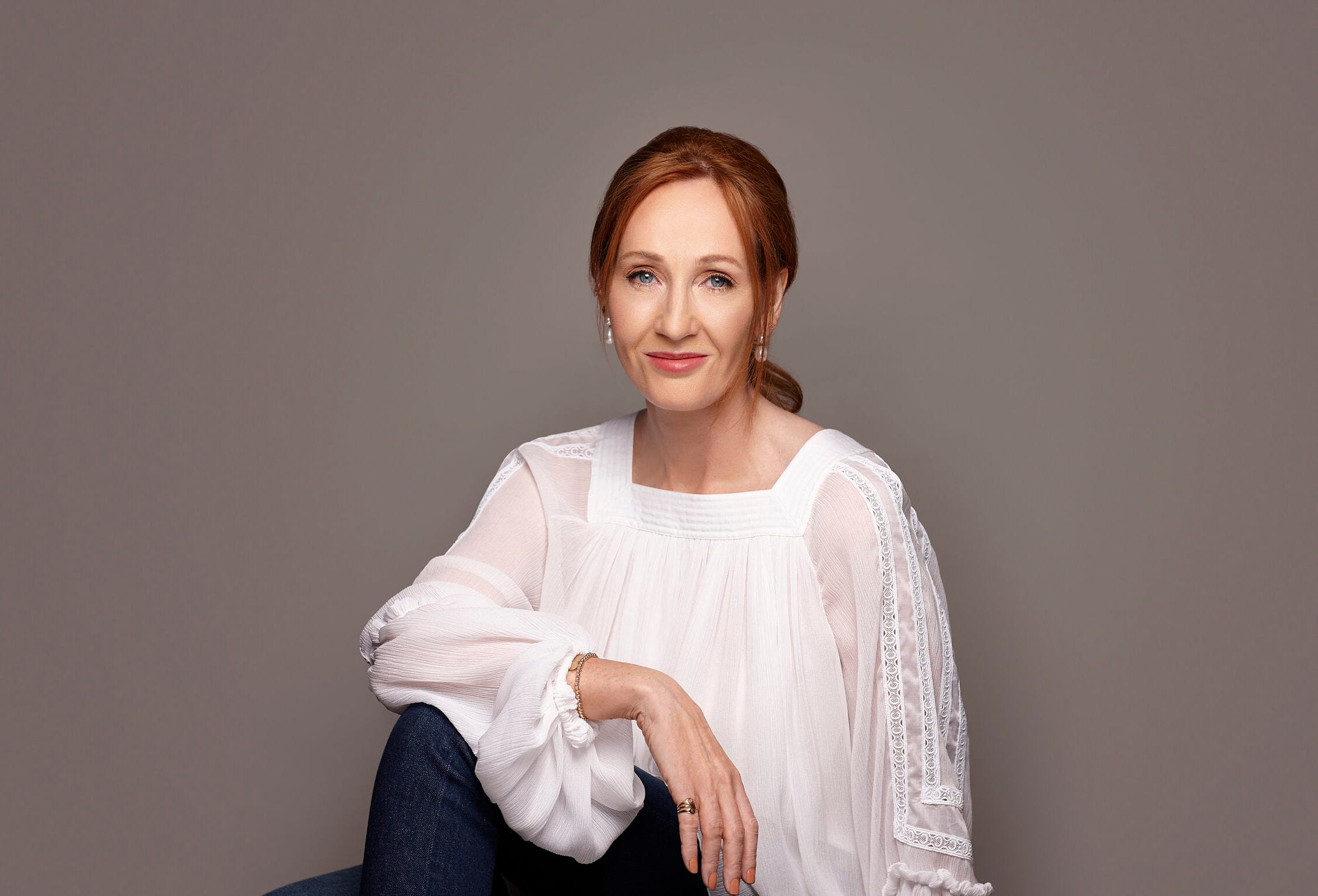
Emma and Daniel‘s public statements have left me seething. The words I have for both of them, but particularly Watson, are ineffable here. I'm glad that Rowling has finally spoken and that the gloves are off. I support her 100%.
Shana Tova.
JK Rowling is an international treasure. Thank you for sharing her latest important message.