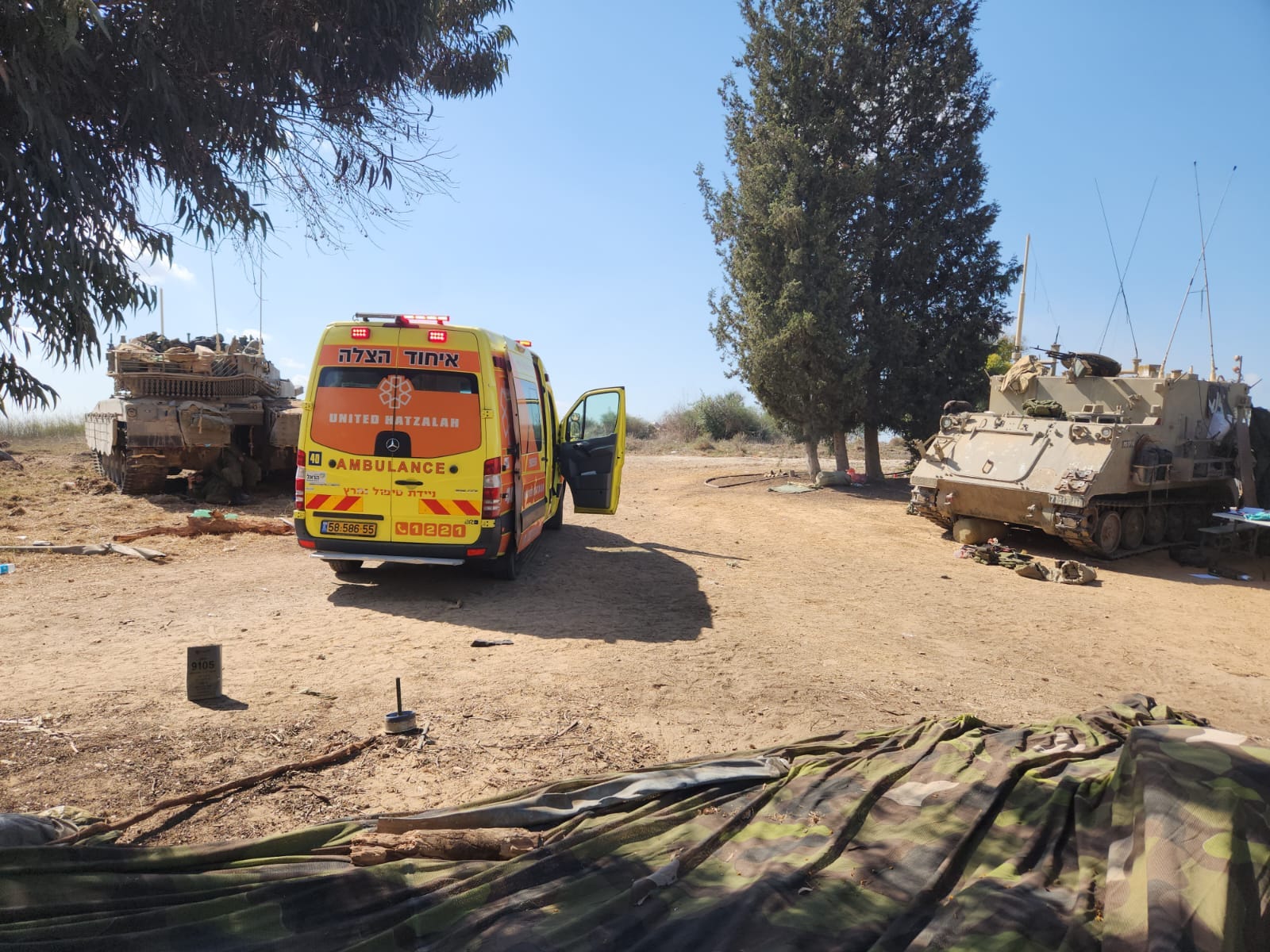
In the days immediately following October 7th, Israel’s deadliest day in modern history, nonprofit organizations raced to mobilize support. Among them was United Hatzalah, one of more than a dozen independent Hatzalah organizations that operate across Israel. Each of these groups is built on a volunteer model of rapid first response, with United Hatzalah emerging as the most internationally prominent.
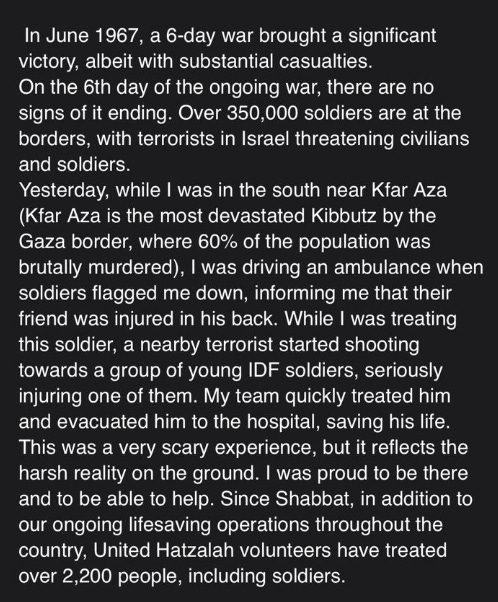
On October 12th, 2023, United Hatzalah circulated an urgent fundraising message under the headline “6th Day of Terror in Israel.”
The appeal painted a vivid scene near Kfar Aza. Eli Beer, the group’s founder and president, recounted driving an ambulance when soldiers flagged him down to help a comrade who, he wrote, had been injured in his back. As Beer began administering treatment, “a nearby terrorist started shooting towards a group of young IDF soldiers, seriously injuring one of them.” According to the message, Beer’s team treated the soldier on the spot, evacuated him to the hospital, “saving his life.”
Yet the account leaves an extraordinary detail unexplained. The description contains no mention of whether the terrorist was neutralized. Read literally, it suggests Beer was both driving an ambulance and treating wounded soldiers while gunfire was ongoing. Such omissions matter because they shape how readers interpret the level of danger, and they raise questions about how these events unfolded in practice.
Months later, when United Hatzalah’s story was committed to print in Angels in Orange, the official chronicle of its activities on and after October 7th (which contains many fabrications), this dramatic episode does not appear. The book, published by ArtScroll, contains numerous stories of bravery, yet the “ambulance under fire” scene highlighted so prominently in the fundraising message is absent.
This discrepancy does not prove fabrication. Accounts written in the heat of an unfolding war may differ from those later selected for publication. Details can be lost, condensed, or omitted for reasons as simple as editorial choice. But the gap between what was shared with donors in an urgent appeal and what was later memorialized in book form raises questions about how narratives are shaped for different audiences.
Those questions are sharpened by Beer’s other post–October 7 claims. In the weeks and months after the attacks, he publicly asserted that United Hatzalah volunteers had killed or captured more than one hundred terrorists. He also described alleged atrocities that were never substantiated, including babies found in ovens, a baby cut from a pregnant woman’s stomach, and a woman subjected to especially brutal rape. Israeli officials and independent journalists later reported that they could not confirm these stories, and United Hatzalah has not retracted them .
Such claims, repeated widely at the time, helped fuel a surge of donations. In the months following October 7th, United Hatzalah raised tens of millions of dollars in Israel and abroad .
The stakes are not just literary. Survivors, soldiers, and donors alike have a vested interest in knowing how events were portrayed and which accounts are reliable. When dramatic narratives appear in one setting and disappear in another, or when fabricated stories are never formally withdrawn, the credibility of lifesaving work itself is put at risk.
Whether the “ambulance under fire” incident happened exactly as described is a question only those present can answer. But the fact that such a vivid story appeared in one venue and disappeared in another, while other unverified claims were allowed to circulate unchecked, is itself noteworthy. It underscores the need for rigor when organizations mix lifesaving work with fundraising, and for ensuring that the truth, however complex, is not selectively told.